The model, the proof, the fund, and the impact — in detail
Twenty-seven years of building taught us that housing alone doesn't break the cycle of poverty. But when you address everything at once, families don't just survive — they build wealth.
Housing is foundational. But a family paying affordable rent still faces energy bills, childcare costs, healthcare expenses, food insecurity, transportation burden, and limited access to job training. Each cost alone is manageable. Together, they consume 68% of a working family's income and leave no margin for savings, emergencies, or wealth-building.
Most programs attack one cost at a time. The Civic Engine model is designed so the building itself eliminates all eight — not through grants that expire, but through infrastructure that lasts.
Arnold Development Group's insight — validated through 27 years of practice — is that addressing all eight major household cost burdens simultaneously creates the conditions for genuine upward financial mobility.
| Stream | Typical Monthly Cost | Integrated Solution | Monthly Savings |
|---|---|---|---|
| 1. Housing | $1,200–1,800 | LIHTC affordable rents (30–60% AMI) | $500 |
| 2. Energy | $150–250 | Passive House + TEN = near-zero utilities | $170 |
| 3. Childcare | $800–1,200/child | On-site affordable childcare center | $800 |
| 4. Healthcare | $150–300 | On-site FQHC preventive care hub | $150 |
| 5. Food | $600–900/family | On-site public market, local vendors | $100 |
| 6. Transportation | $600–900/car | Transit-oriented, walkable community | $800 |
| 7. Wellness | $50–100 | Community wellness center | $100 |
| 8. Job Training | Lost wages | On-site workforce development | $400+ |
| Total Potential Monthly Savings | $3,020 | ||
When these savings compound over time, the result is transformational. A family investing even half of these savings — $1,500 per month in a simple index fund at historical average returns — accumulates approximately:
This is not incremental improvement. This is not a program. This is infrastructure for genuine wealth building. And it works because the savings come from the built environment itself — from Passive House construction, from geothermal energy systems, from walkable neighborhoods — not from grants that expire or subsidies that fluctuate.
Historic Northeast Lofts proves every piece of the model works — at institutional scale, with institutional financing.
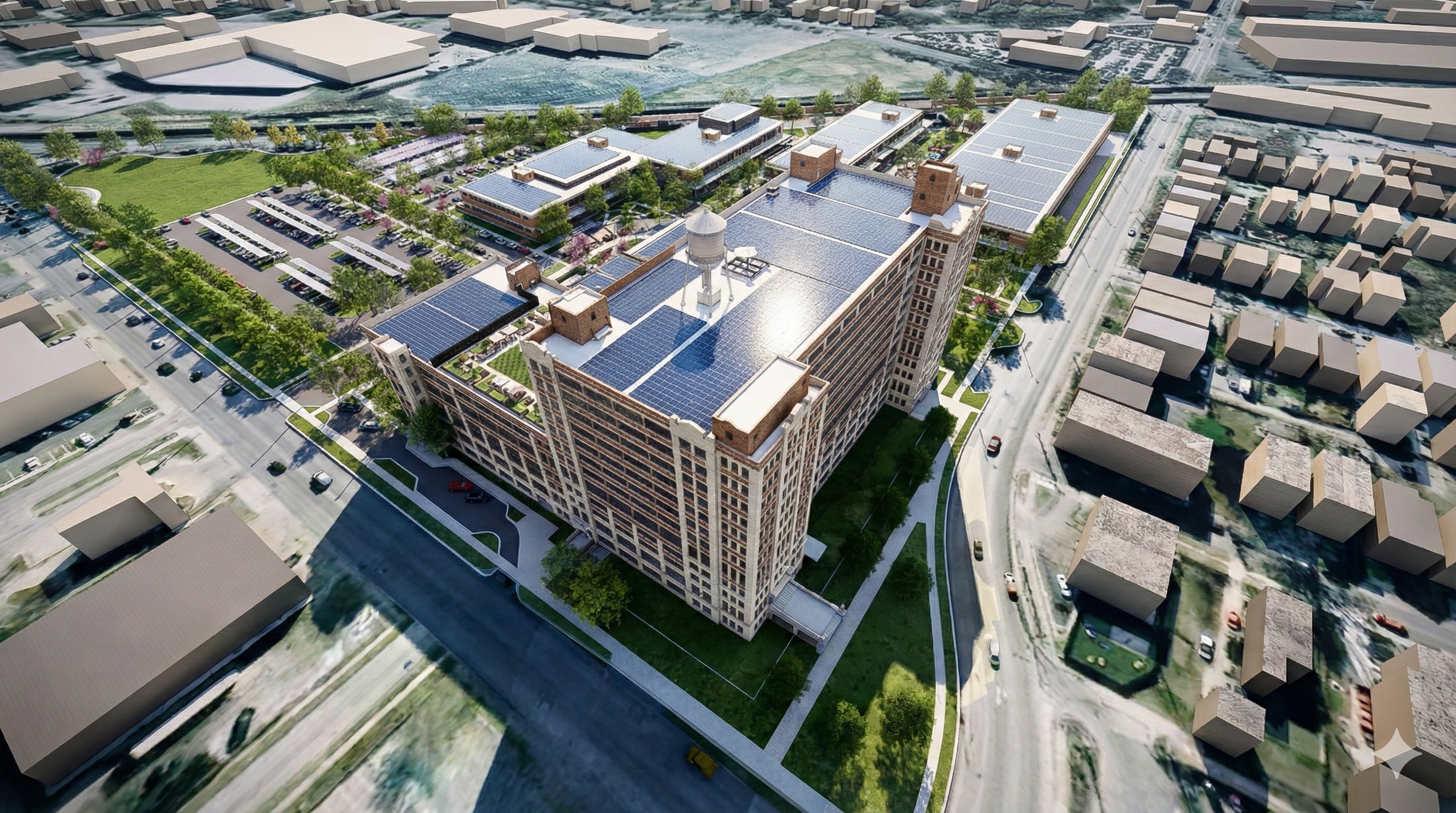
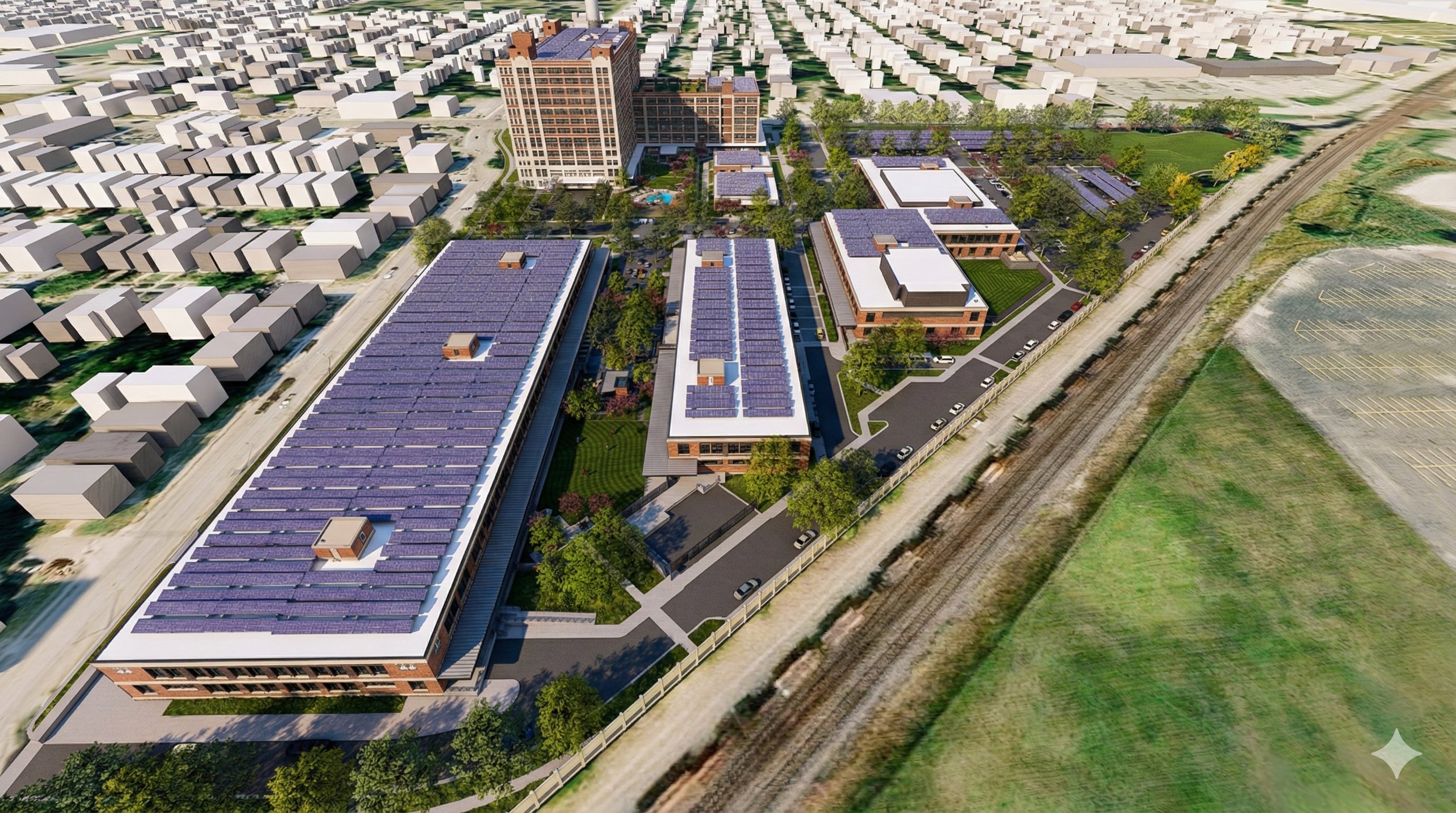
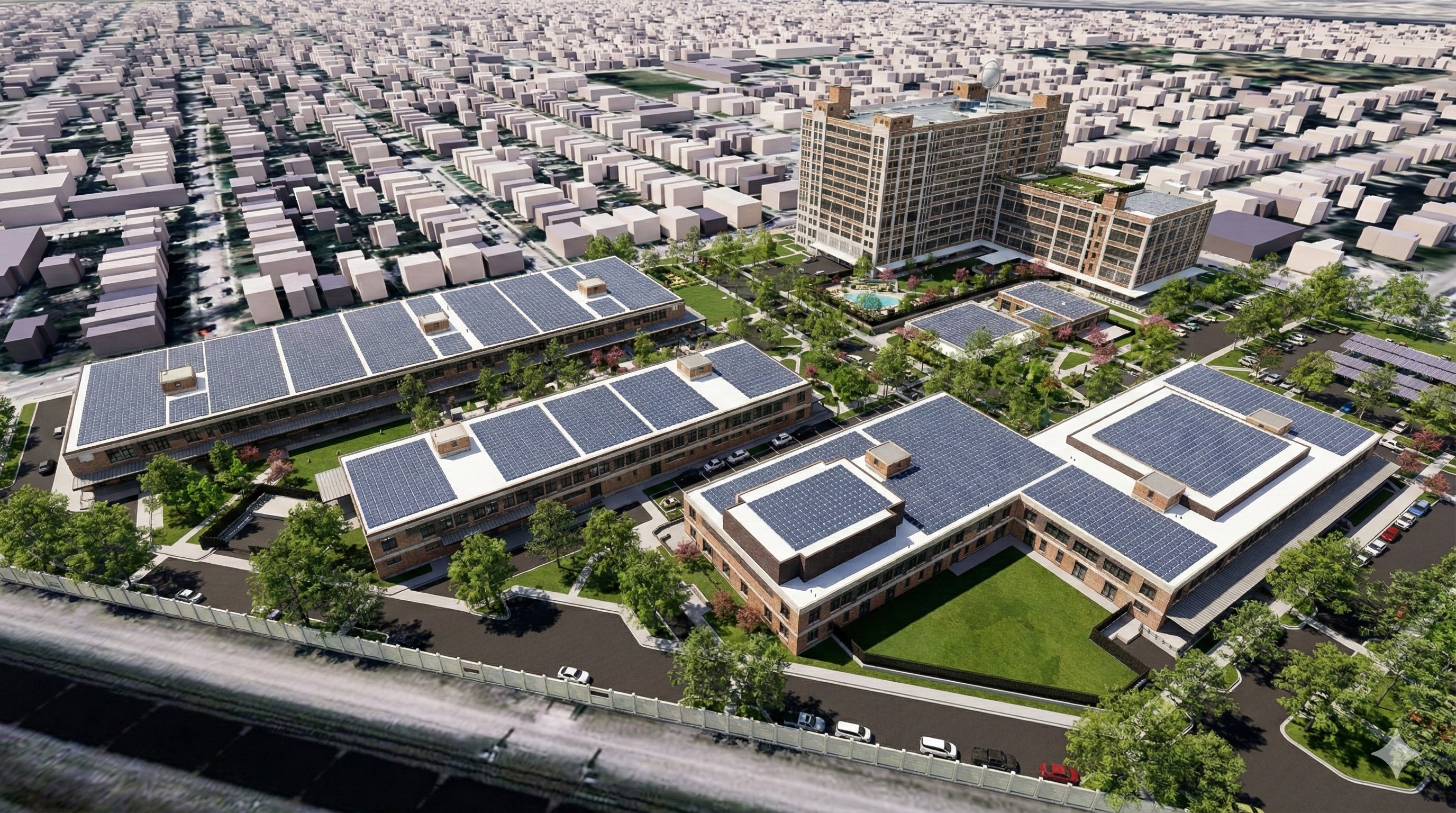
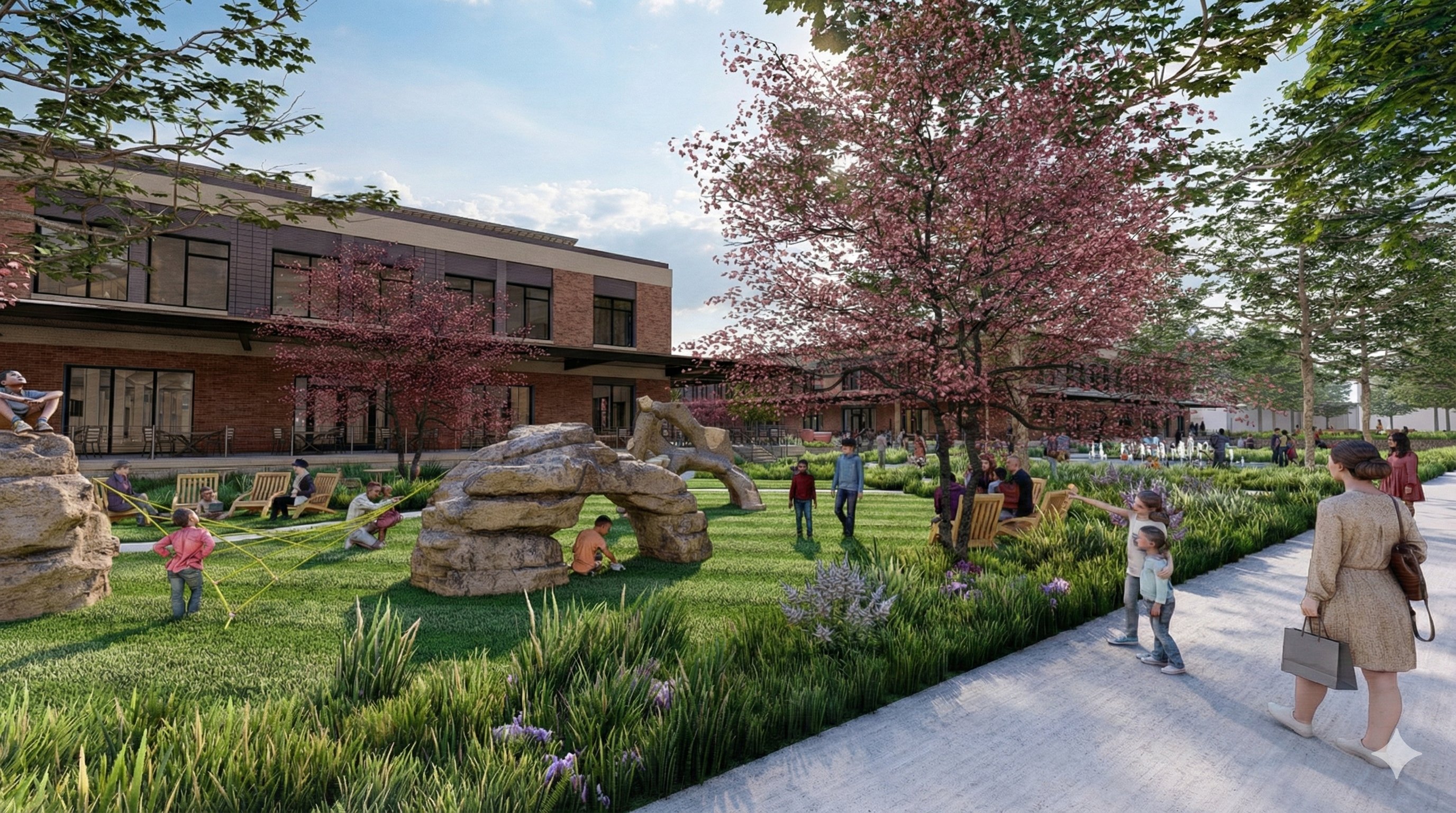
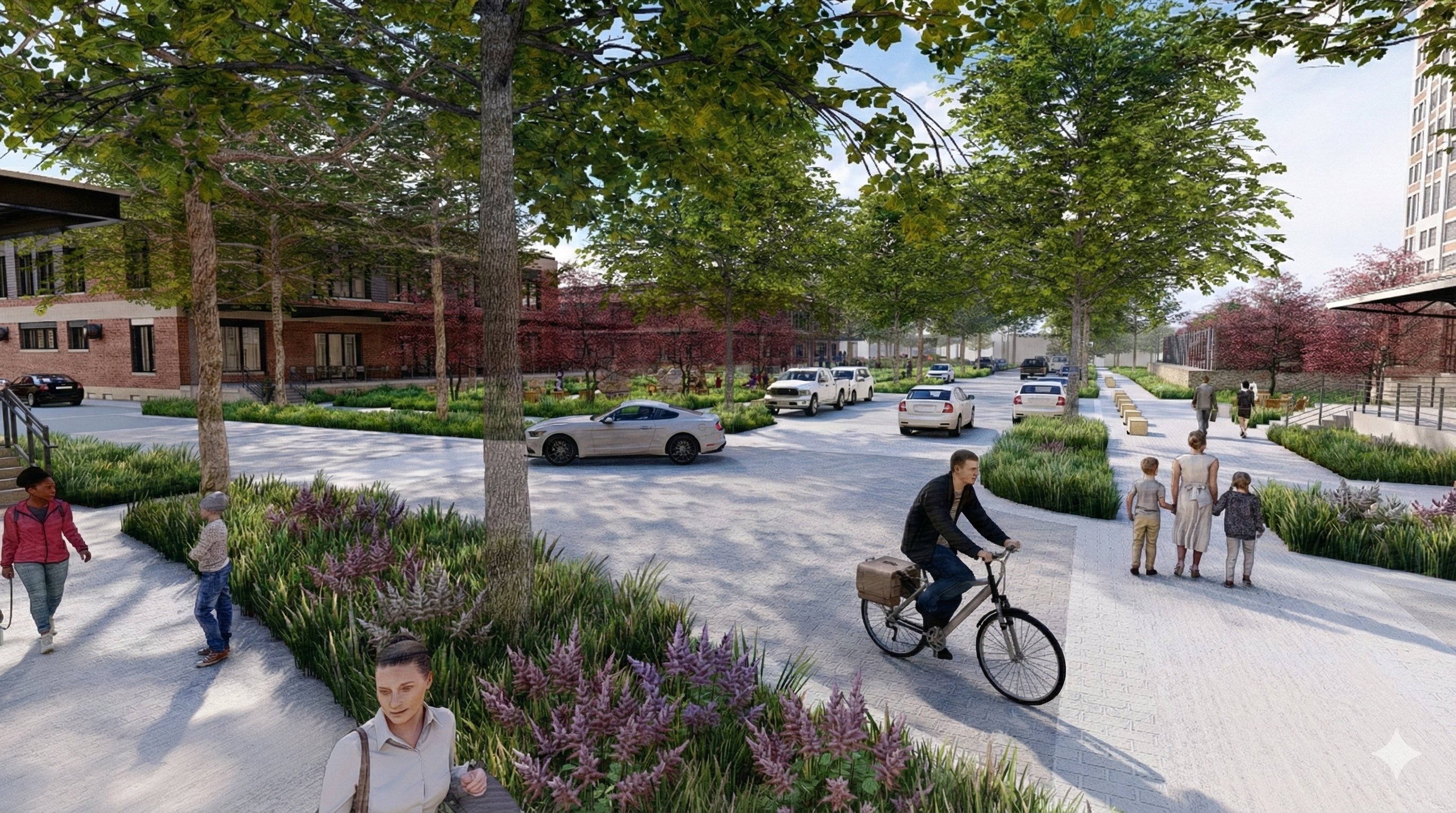
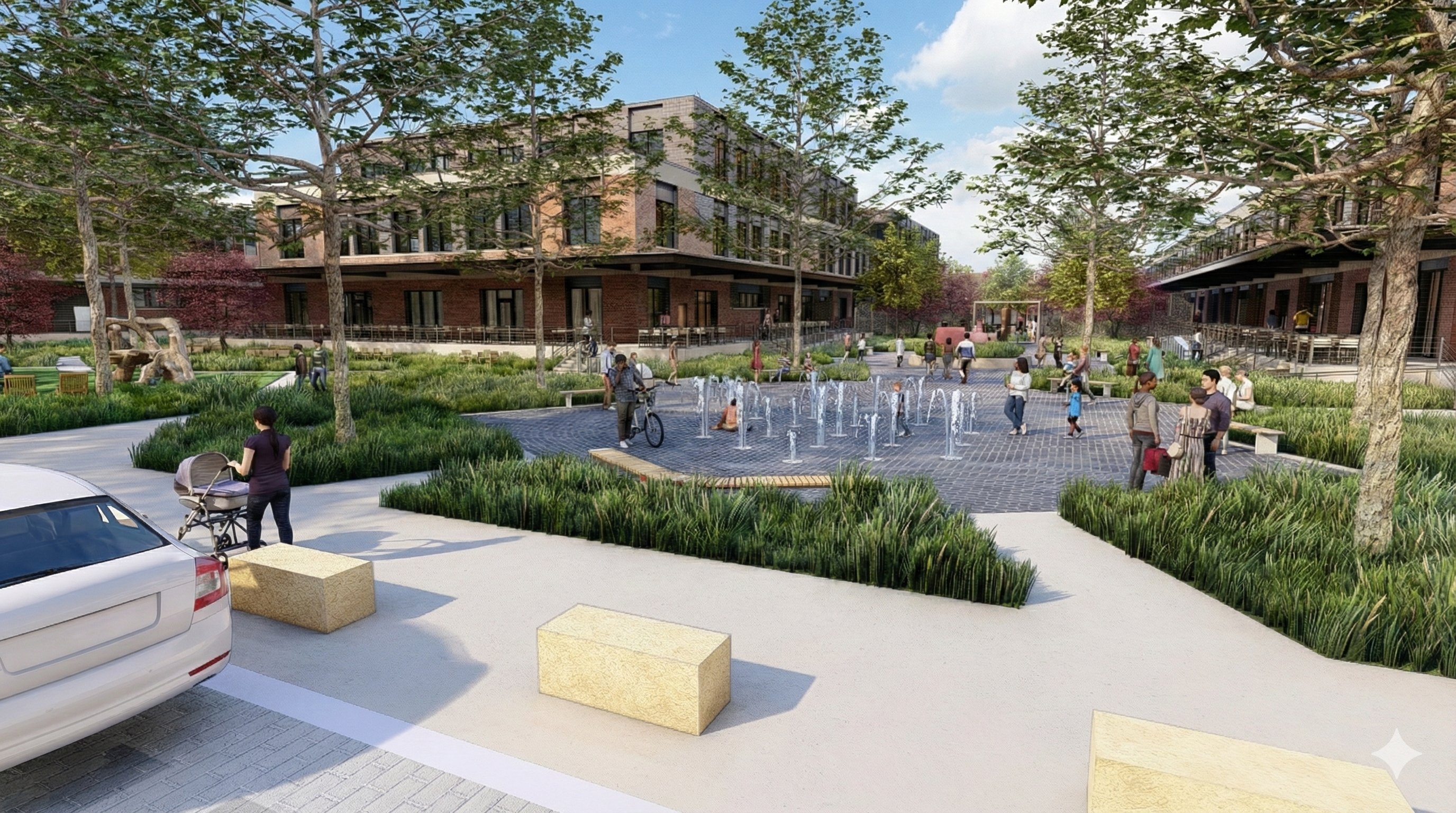
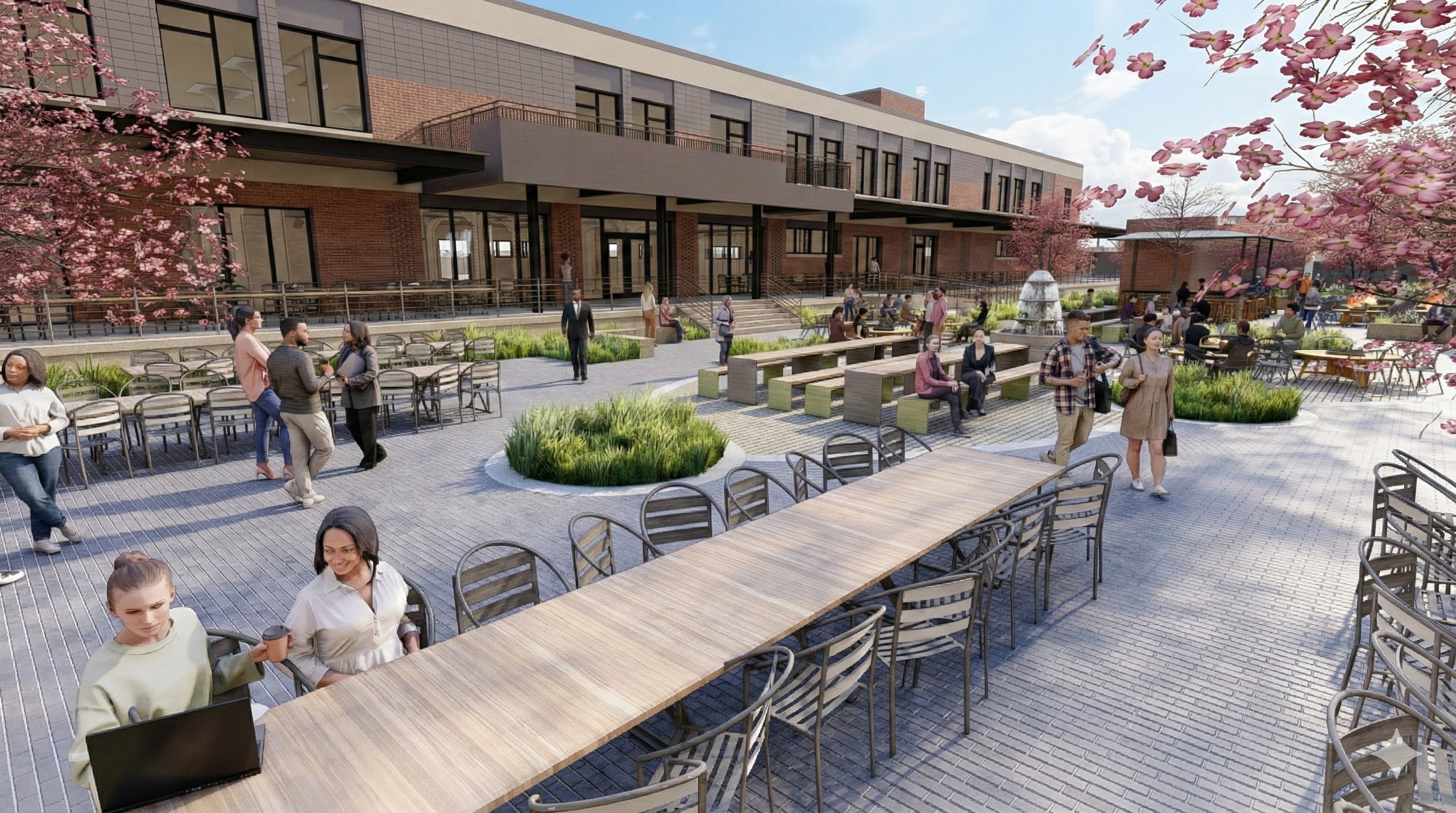
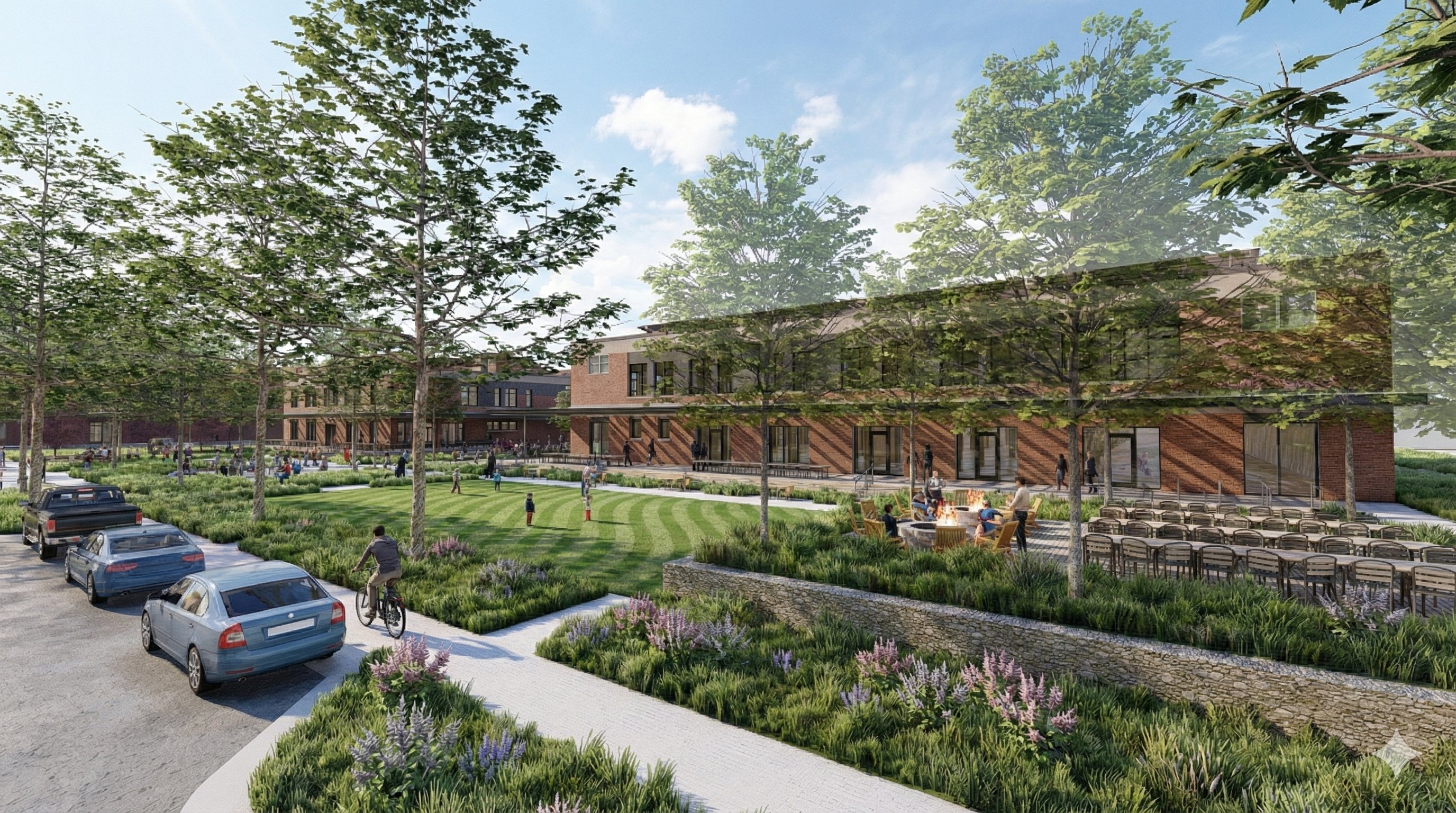
Historic Northeast Lofts — $451M · 22 acres · 395 homes · Fund's First Deployment
The Historic Northeast is one of Kansas City's most diverse and resilient neighborhoods — and one of its most underinvested. The families who will live here have been told for decades that the city doesn't build where they live. This project is a direct answer to that.
Historic Northeast Lofts is a $451 million, 22-acre adaptive reuse development in Kansas City that broke ground in December 2025 — and the Fund's first backstop project. JPMC, as Federal Historic Tax Credit investor, requires a guarantor with at least $10M in assets; Civic Engine Guarantee Pool satisfies this once the program reaches its $10M commitment threshold. It delivers 395 homes (83% affordable at 30–80% AMI) with every one of the eight cost-burden streams addressed through integrated design:
| Component | Specification | Impact |
|---|---|---|
| Housing | 395 units, 83% affordable | Below-market rents for working families |
| Energy | 4 MW solar + 228 geothermal wells | Zero utility bills for residents |
| Childcare | On-site early learning center | Walkable, affordable childcare |
| Healthcare | FQHC community health hub | Preventive care replacing ER visits |
| Food | 29,500 SF public market, 18 vendors | Fresh food eliminating food desert |
| Transportation | Independence Ave bus route | 17 min to downtown, reduced car dependence |
| Wellness | 30,000 SF wellness center | Free/low-cost fitness and health programs |
| Job Training | Workforce dev + coworking spaces | Pathways from $30K to $45K+ jobs |
The financing structure proves institutional viability: LIHTC + Historic Tax Credits + ITC + TIF + EPA Brownfield RLF ($7.575M) + Housing Trust Fund + conventional debt. This is not a pilot project dependent on a single grant. It is a construction-stage, multi-source, institutionally financed development.
Each stage of ADG's evolution was deliberately designed to prove the next level of ambition:
276 units · $109M · World's largest Passive House certified building at time of completion
Proved: Ultra-efficient construction is viable at institutional scale. Certified to Passive House standards, the building achieves 70% energy reduction versus code — measured and verified, not modeled. It won the National Apartment Association's Best New Construction Community award in 2022, commands premium rents, and demonstrated that a mission-driven developer in a mid-size American city could build at a scale that commands national attention.
395 units · $451M · 22 acres · All 8 streams operational · Fund's first backstop
Proves: Full theory of change is institutionally financeable at $451M scale. Under construction now.
4,000 units · $1.15B · Two districts · North Loop + Crossroads
Will prove: The proven model deployed at transformational, neighborhood scale across Kansas City.
Groundbreaking ceremony — Historic Northeast Lofts, December 2025
North Loop and Crossroads — complementary projects that together transform Kansas City's housing landscape.
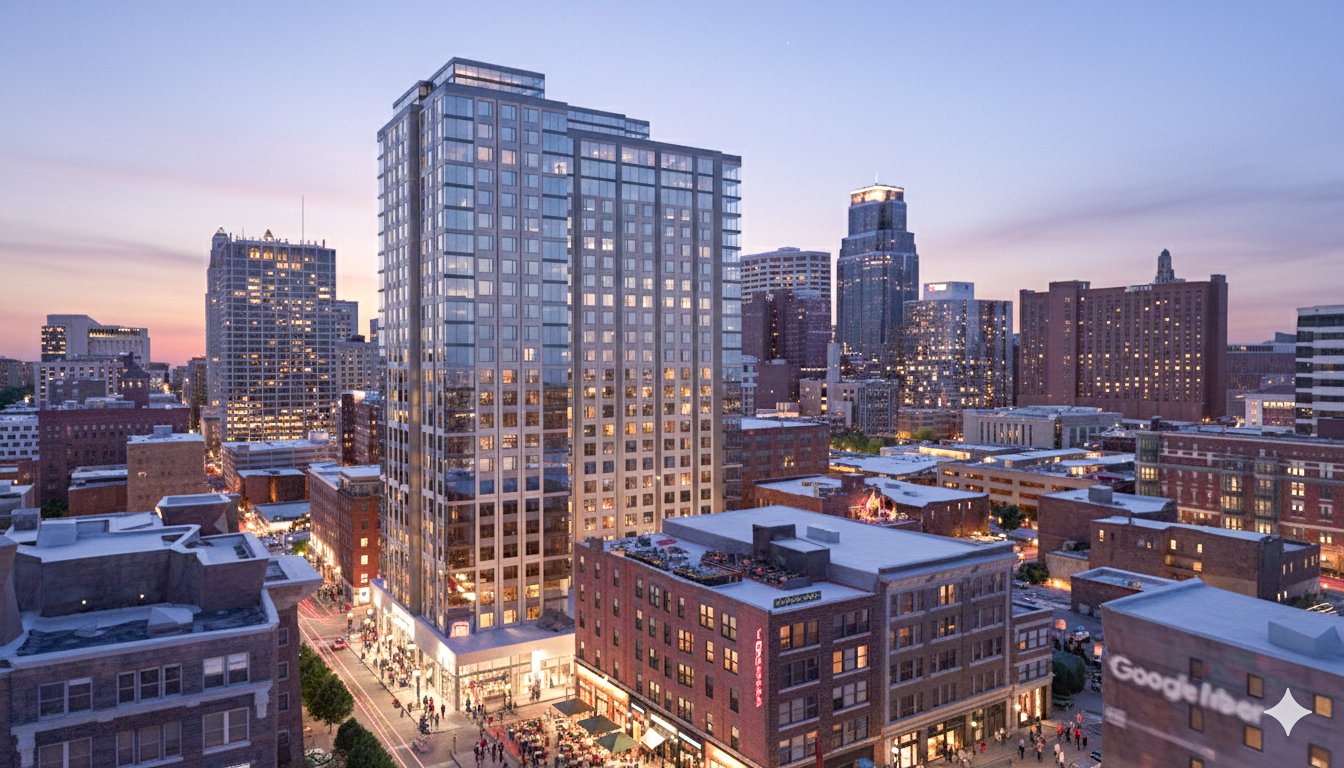
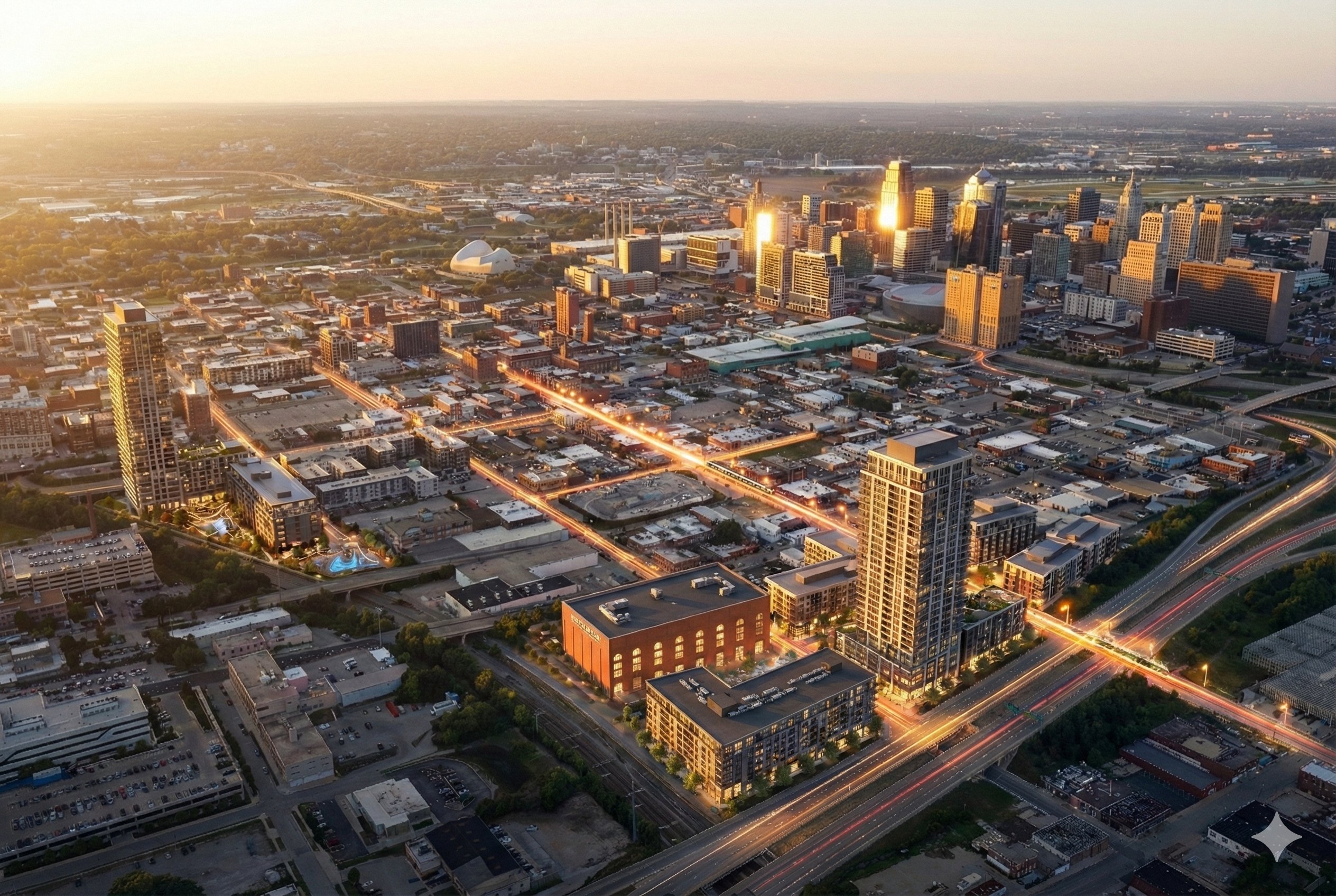
The Crossroads Arts District brings something the North Loop does not: an existing cultural ecosystem. Galleries, studios, performance venues, and creative businesses provide a foundation of community identity that most new developments spend decades trying to manufacture.
The KC Streetcar provides free, high-frequency transit connecting both districts — a two-mile corridor from North Loop through downtown to Crossroads. Residents at either project can access employment, healthcare, education, and entertainment without owning a car. The planned 18th Street east-west extension will create a multi-axis transit hub directly through the Crossroads site.
The anchor property — the Tension Envelope Building — is a 500,000 SF historic industrial structure eligible for Federal and State Historic Tax Credits. Its lower floors will house a biotech laboratory serving Kansas City's growing life sciences sector, while upper floors become loft-style residences with the industrial character that commands premium rents.
| Metric | North Loop | Crossroads | Combined |
|---|---|---|---|
| Total Units | 2,000 | ~2,000 | ~4,000 |
| Affordable Units | 800 | ~800 | ~1,600 |
| Development Cost | $552M | ~$600M | ~$1.15B |
| Annual Energy Savings | $2.4M | ~$2.4M | ~$4.8M |
| Annual CO₂ Avoided | ~4,000 tons | ~4,000 tons | ~8,000 tons |
A structure designed so supporter capital is never spent — it works by guaranteeing, not granting.
Civic Engine Fund solves a structural problem: mission-driven developers cannot access institutional-scale financing because lenders require personal guarantees that consume the developer's entire balance sheet on a single project. One building at a time. No path to scale.
The program removes this constraint. By pooling Guarantee Support Providers' pre-funded commitments in U.S. Treasuries and using that pool as collateral for construction-loan guarantees, it enables a developer to build at the scale of a for-profit one — without compromising a single principle.
| Term | Value |
|---|---|
| Program Launch Threshold | $10,000,000 in total commitments (designed to scale) |
| Gross Treasury Yield | ~4.50% (at current rates) |
| Program Administration | Cost-recovery; no carried interest or performance fee |
| Interest to Supporters | Accrued Treasury interest distributed pro rata (~4.35% at current Treasury rates) |
| Collateral | 100% U.S. Treasuries (pre-funded commitments) |
| Guarantee Coverage | Structured per project; loss-sharing with developers and financers |
| Program Term | 15 years (5-year origination period) |
| Minimum Commitment | $1,000,000 per Guarantee Support Provider |
| PRI / Grant Eligible | Foundations and DAFs may grant or PRI to the Parent (subject to tax counsel confirmation) |
| Distributions | Accrued interest distributed pro rata; undrawn principal returned after the program's term |
| Parent / Guarantee Entity | Civic Engine Fund (Missouri nonprofit) / Civic Engine Guarantee Pool, LLC (Delaware) |
The guarantee structure is fundamentally different from traditional philanthropic or impact investing models:
Illustratively, over a multi-decade horizon the guarantee structure can enable many times more development than a one-time grant of the same size — because the capital is preserved as Treasury collateral and recycles as each project stabilizes, rather than being spent. Figures are illustrative projections, not promised returns.
The numbers build because each project continues generating value while the fund grows and deploys to the next one.
Impact compounds through two mechanisms simultaneously. First, the fund grows: retained Treasury interest compounds the capital base, enabling each cycle to support larger developments. Second, value accumulates: every project that reaches occupancy generates annual social and environmental value for the life of the building — 50+ years for Passive House construction.
| Milestone | Projects | Total Units | Affordable | Fund Value | Community Value* |
|---|---|---|---|---|---|
| Year 5 | 2 | 2,000 | 800 | $145M | $24M |
| Year 10 | 3 | 4,000 | 1,600 | $176M | $122M |
| Year 20 | 6 | 12,000 | 4,800 | $260M | $549M |
| Year 30 | 8 | 16,000 | 6,400 | $386M | $1.28B |
| Year 40 | 11 | 22,000 | 8,800 | $487M | $2.32B |
*Community Value = cumulative quantified social value (rent savings + energy savings + carbon avoidance). This is distinct from the illustrative 51× development multiple, which measures total development enabled through capital recycling.
We quantify impact in two tiers to maintain analytical rigor. Tier 1 (conservative, auditable) covers rent savings, energy savings, and carbon avoidance — contractually guaranteed or physics-based. Tier 2 (illustrative) adds childcare, healthcare, transportation, food, job training, and wellness — grounded in authoritative data but dependent on service utilization.
Passive House construction and Thermal Energy Networks§ compound environmental benefits as each project operates over its 50+ year design life:
| Milestone | Annual CO₂ Avoided | Cumulative CO₂ | Equivalent |
|---|---|---|---|
| Year 10 | 8,000 tons | 40,000 tons | 8,700 cars off road |
| Year 20 | 20,000 tons | 180,000 tons | 39,100 cars off road |
| Year 40 | 40,000 tons | 760,000 tons | 165,000 cars off road |
Over 40 years, the fund's projects generate 30,000+ construction FTE-years and 660 permanent jobs in property management, energy systems, and community services. Each project creates workforce development pipelines through on-site job training programs — pathways from service-sector wages to middle-class careers.
From initial conversation to funding — here is the step-by-step process for directing a grant or PRI to Civic Engine Fund.
| Step | What Happens | Timeline |
|---|---|---|
| 1. Initial Conversation | Meet with Jonathan Arnold to discuss your philanthropic goals and how the program works | Week 1 |
| 2. Review Materials | Share the program documents (Master Guarantee Support Agreement, Program Guide) and governing documents with your advisors | Weeks 1–4 |
| 3. Contact Your DAF | Email your DAF sponsor requesting a grant or PRI to Civic Engine Fund | Weeks 2–4 |
| 4. Sponsor Due Diligence | Your DAF sponsor’s legal and grants team reviews the program documents and charitable purpose | Weeks 3–8 |
| 5. Agreement | DAF sponsor executes the grant or PRI agreement (and, for a Guarantee Support Provider commitment, the Master Guarantee Support Agreement) | Upon approval |
| 6. Funding | Commitment pre-funded into the Treasury-backed pool; periodic reporting begins | Per program schedule |
| Milestone | Status | Timeline |
|---|---|---|
| Historic Northeast Lofts — 395 homes | Under construction | Broke ground Dec 2025 |
| North Loop Phase 1 — 500 homes | Pre-development | 2026–2028 |
| Crossroads Phase 1 — Tension Envelope reuse | Site acquisition | 2026–2029 |
| Full build-out — 4,000 homes across two districts | Phased | 2026–2035 |
Or visit the Data Room for full fund documentation
Jonathan Arnold · Arnold Development Group
jarnold@arnolddevelopmentgroup.com · (816) 529-7010